CNC Machining Quality Inspection: 6 Key Aspects
Quality control is critical across all industries, whether for components, processes, products, equipment, or machinery. Increasingly, manufacturers are opting for CNC machining over traditional methods due to its higher productivity and process efficiency. However, quality inspection remains a crucial part of the manufacturing workflow. Proper quality control and inspection must occur at multiple stages of the production process.
It is important to distinguish quality assurance from quality control. Quality assurance involves establishing formal procedures, often carried out by authorized personnel such as CNC operators, using proper documentation to report results. In contrast, quality control is the practical application of these procedures during production.
This article explores the importance of quality inspection in CNC machining and the procedures involved.
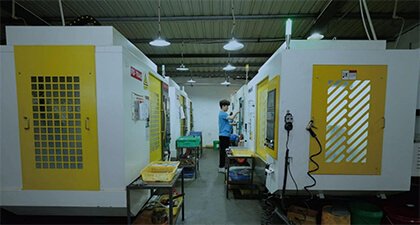
Three Modes of CNC Machining Quality Inspection
1. Machine Accuracy Testing
At this stage, the calibration and movement accuracy of the CNC machine are checked. Key aspects include spindle alignment, support structures, and axes. All physical components must maintain proper relationships; for example, the column of a vertical machining center must be perpendicular to its base. Linear axes must also be inspected for precision.
2. Component or Product Evaluation
This stage involves verifying the dimensions and positioning of parts. Variables such as orientation, surface finish, and contours are assessed. Geometric and dimensional tolerances are checked against specifications or functional requirements.
3. Process Control and Monitoring
Monitoring every stage of the production program prevents inefficiencies that could lead to defective products, failures, or production bottlenecks. Quality checks are applied throughout the product lifecycle, from concept and design to prototyping, testing, and mass production.
Important Parameters During CNC Machining Quality Inspection
When manufacturing components with CNC machines, it is essential to ensure prototypes meet required specifications. Key inspection metrics include:
- Achieving precise geometric and dimensional tolerances, minimizing deviations.
- Checking the CNC machine spindle for proper operation.
- Verifying equipment calibration, as accuracy may decline over time.
- Recording inspection results for future reference.
- Considering ISO certification levels for credibility.
- Ensuring reliability and communication when outsourcing services.
- Evaluating all equipment features and warranties when renting or purchasing.
Six Best Practices for CNC Machining Quality Control
1. Effective Communication
Timely communication with clients throughout the manufacturing process and after prototype delivery is vital, as buyers have specific requirements for product features and functionality.
2. Understanding Product Design
Engineers must thoroughly review CAD models and fully understand customer specifications before production. Using cost-effective methods, all CNC variables should be adjusted to meet required tolerances.
3. Service and Product Standards
Monitoring and testing procedures are defined by design specifications, production protocols, procurement documentation, and inspection/testing guidelines for all precision components.
4. Incoming Product Verification
All purchased materials should be visually inspected by receiving inspectors, with authorized items undergoing technical quality control checks.
5. Process Inspection
Process inspection includes first-article inspections and operator checks to ensure quality and timely delivery of production orders.
6. Final Inspection
Final quality control involves confirming all required checks are complete, conducting follow-up tests, and documenting results. Only products passing final inspection are packaged and shipped.
It is also critical to consider the type of CNC equipment used for prototyping and manufacturing. For example, a 4-axis vertical CNC milling machine typically provides superior dimensional accuracy, surface finish, and the ability to create complex contours compared to 2-axis or 3-axis machines.
Conclusion
Quality inspection is essential in CNC machining to verify that manufactured components meet industry, company, and customer standards. Rigorous quality control checks prevent defects, manage risk, ensure optimal performance and precision, reduce waste, lower costs, and improve overall efficiency. Proper CNC quality management benefits both manufacturers and end-users.