CNC Machining Advantages and Applications
CNC machining has become ubiquitous in modern manufacturing. From automotive components and aerospace structures to precision medical devices, CNC plays a critical role in producing high-quality parts. But what exactly is CNC machining, and why is it widely used across industries? In this article, we explore CNC machining from multiple angles, covering its principles, advantages, types, applications, and key factors affecting quality.
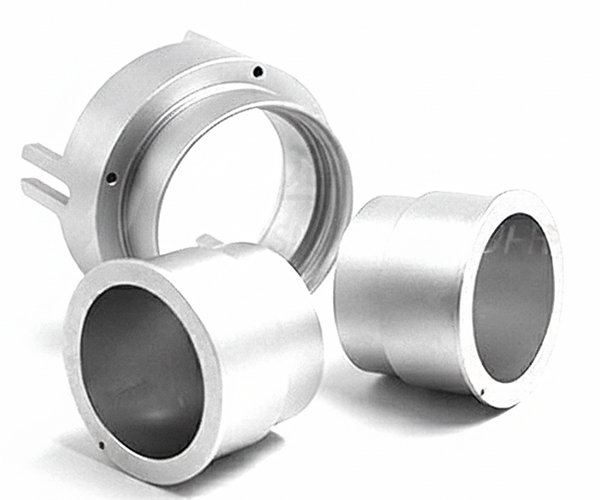
Understanding CNC Machining
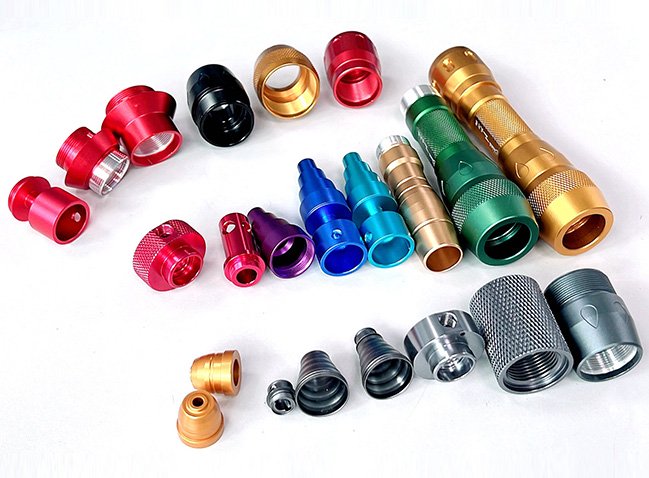
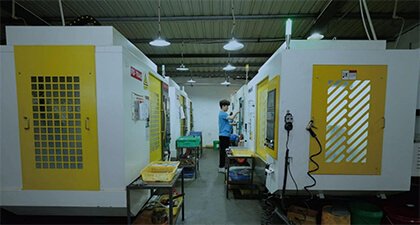
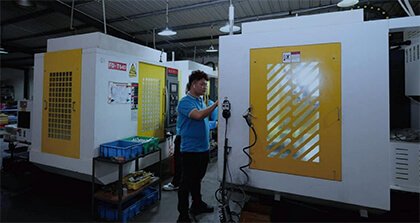
CNC (Computer Numerical Control) machining is a manufacturing process in which computer programming controls machine tools. Operators input part geometry, tool selection, cutting speeds, and other parameters into the CNC system. The machine then automatically performs operations such as cutting, drilling, milling, and turning.
Compared to traditional manual machining, CNC machining relies on automated programming rather than human operation, significantly improving precision and consistency.
Key Advantages of CNC Machining
High Precision
CNC machines can achieve micron-level accuracy, ensuring consistent quality across every batch. This is crucial for manufacturing precision components, such as aerospace turbine blades and medical implants.
High Efficiency for Mass Production
Once a program is set up, CNC machines can operate continuously, reducing production cycles and improving overall efficiency.
Capability for Complex Parts
CNC machining can handle curved surfaces and irregular shapes that are difficult for traditional machines, using multi-axis movement and advanced tool path planning.
Reduced Dependence on Skilled Labor
Automation reduces reliance on highly experienced technicians and minimizes the risk of human error.
Strong Repeatability
The same program can be reused multiple times, ensuring consistent quality, especially in batch production.
Types of CNC Machining
CNC Turning
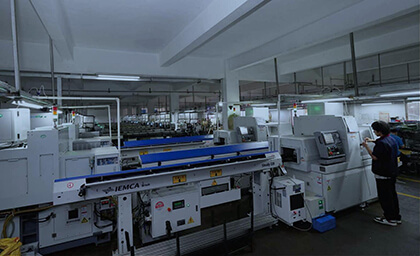
Uses lathes to rotate the workpiece while removing material, suitable for cylindrical parts.
CNC Milling
Employs milling cutters on a stationary workpiece, ideal for flat surfaces, grooves, holes, and complex curves.
CNC Drilling
Specialized for drilling, reaming, and tapping operations.
CNC Grinding
Uses abrasive wheels for high-precision grinding, improving surface finish and dimensional accuracy.
Five-Axis Machining
Multiple axes move simultaneously, enabling complex geometries and contoured surfaces, essential in high-end manufacturing.
Applications of CNC Machining
Automotive Manufacturing
Engine blocks, transmission components, and structural parts are often produced using CNC machining to ensure performance and precision.
Aerospace
Aircraft structural components, turbine blades, and wing frames rely on CNC machining for high-precision fabrication.
Electronics
CNC is used for mobile phone housings, heat sinks, and precision connectors requiring tight tolerances.
Medical Devices
Artificial joints, dental implants, and surgical instruments demand high precision and superior surface finish.
Mold Manufacturing
CNC machining produces plastic molds, stamping dies, and die-casting molds with high accuracy.
CNC Machining Process
Design and Programming
Part designs are created using CAD/CAM software, and machining programs are generated.
Machine Setup
Tools are installed, workpieces are clamped, and the machine is aligned according to the program.
Trial Cutting and Inspection
Test cuts are performed to verify accuracy before full-scale production.
Batch Production
After sample approval, the machine executes the program for mass production.
Post-Processing and Quality Control
Parts undergo deburring, polishing, and inspection to meet specifications.
Factors Affecting CNC Machining Quality
- Tool Selection and Wear: Tool material, geometry, and wear impact surface quality.
- Machine Precision and Rigidity: High-precision, rigid machines reduce vibration and errors.
- Cutting Parameters: Feed rate, cutting depth, and spindle speed must match material and tool characteristics.
- Fixture and Workpiece Clamping: Stable clamping prevents part movement during machining.
- Programming Expertise: Optimized tool paths shorten production time and improve surface finish.
Conclusion
CNC machining offers high precision, efficiency, and the capability to produce complex parts, making it indispensable in modern manufacturing. From traditional turning, milling, and drilling to advanced five-axis and automated machining, CNC technology continues to drive industry upgrades. As CNC machines and processes evolve, their applications will expand, supporting smarter, faster, and more reliable manufacturing across multiple sectors.